

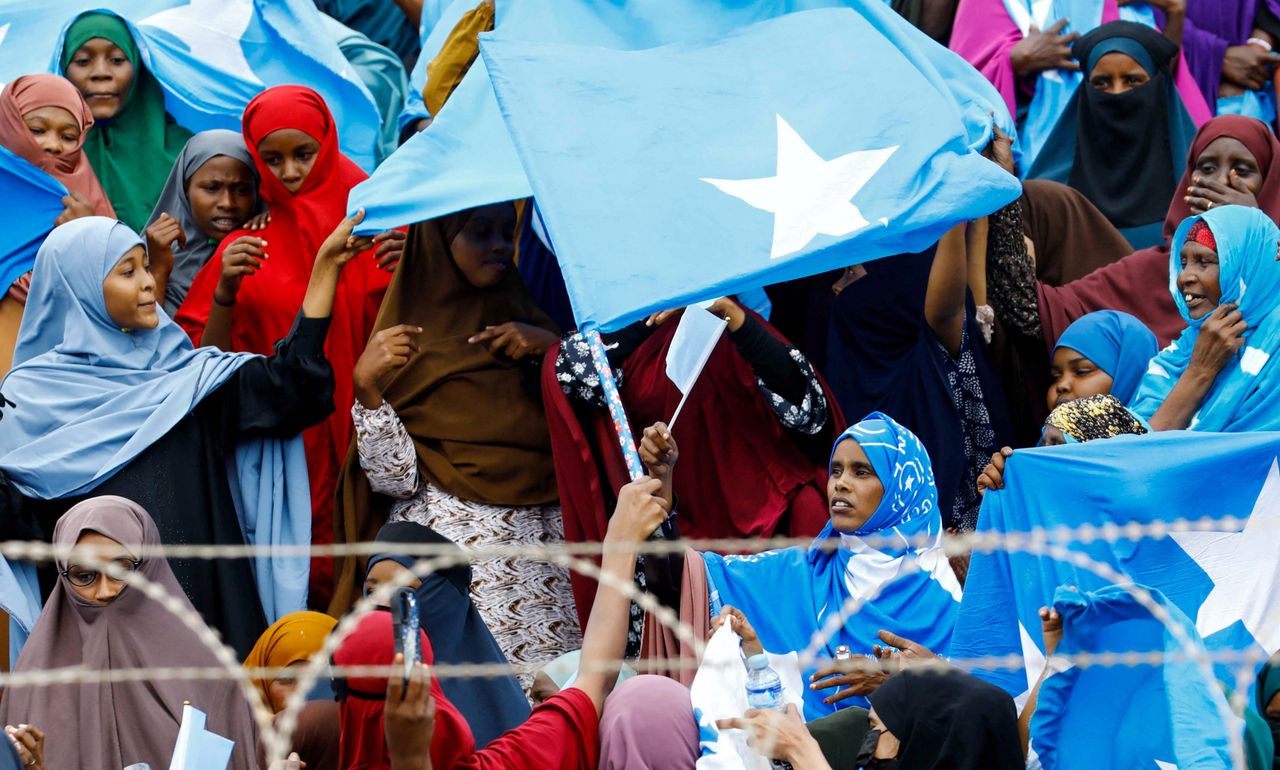
WASHINGTON: Thousands of Somali nationals living and working legally in the United States remain caught between federal immigration policy and an ongoing court battle after the U.S. Citizenship and Immigration Services (USCIS) issued updated guidance on the government’s effort to end Temporary Protected Status (TPS) for Somalia.
The July 1 update does not immediately end legal protections for Somali beneficiaries. Instead, it provides employers with revised instructions for verifying work authorization while litigation over the policy continues. The guidance reflects an increasingly complex legal landscape in which the Trump administration is pressing ahead with efforts to narrow humanitarian immigration programs even as federal courts continue to review several of those decisions.
A Program Meant to Be Temporary
Temporary Protected Status allows nationals of countries experiencing armed conflict, natural disasters or other extraordinary conditions to live and work legally in the United States for a limited period.
Somalia has remained under TPS designation for years because of persistent insecurity, armed conflict, terrorism and humanitarian crises. Successive U.S. administrations repeatedly renewed those protections, arguing that returning beneficiaries to Somalia would expose them to significant risks.
Earlier this year, however, the Department of Homeland Security announced that Somalia no longer met the statutory requirements for the designation, saying conditions had improved sufficiently to justify ending the program.
Courts Have Delayed the Termination
The government’s decision did not take effect as originally planned.
A federal court temporarily halted the termination after immigrant advocacy organizations challenged the decision, allowing Somali TPS beneficiaries to retain their work authorization while the case proceeds.
USCIS’s latest guidance instructs employers to continue recognizing affected Employment Authorization Documents under the court order and provides updated procedures for completing Form I-9 and E-Verify requirements until further legal action determines the program’s future.
Immigration Policy Continues to Shift
The Somalia case forms part of a broader effort by the Trump administration to scale back Temporary Protected Status for several countries.
Recent policy decisions have targeted TPS designations for Haiti, Syria, Yemen, Ethiopia, South Sudan, Burma and other nations, arguing that the humanitarian program had expanded beyond its original temporary purpose.
Supporters of the policy say TPS was never intended to become a long-term immigration pathway and that countries should transition away from emergency protections once conditions improve.
Immigrant rights organizations counter that many of the affected countries continue to face armed conflict, political instability and humanitarian emergencies that make safe return impossible for many beneficiaries.
Minnesota’s Somali Community Watching Closely
Few places in the United States are following the developments more closely than Minnesota, home to the country’s largest Somali diaspora.
Although only a relatively small number of Somali nationals are directly protected under TPS, community organizations say changes to the program generate broader concern because they affect families, employers and legal residents with close ties to those beneficiaries.
For many Somali-Americans, the issue extends beyond immigration paperwork. It touches on family reunification, employment, education and the long-term stability of communities built over decades.
The Road Ahead
For now, the legal status of Somali TPS holders remains unchanged under the court order.
But the broader trajectory is clear. The administration continues to pursue a narrower interpretation of humanitarian protections, while courts are increasingly becoming the arena where those policies are tested.
Whether Somalia’s TPS designation ultimately ends will depend not only on the government’s assessment of conditions inside the country but also on how federal judges interpret the limits of executive authority over humanitarian immigration programs.
Until then, thousands of Somali nationals remain in legal limbo, authorized to stay and work today, yet uncertain about what tomorrow’s court rulings may bring.