


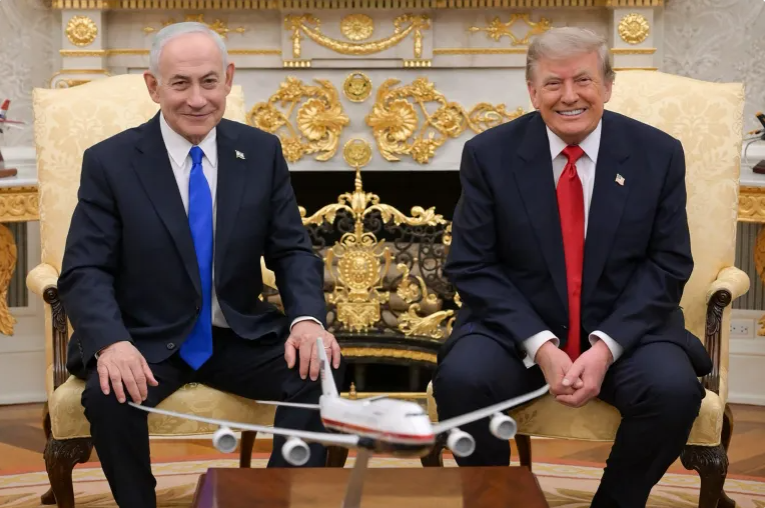
For decades, Israel’s relationship with the United States was considered one of the strongest and most enduring alliances in modern diplomacy. Support for Israel transcended party politics, with both Democrats and Republicans viewing the alliance as a cornerstone of American foreign policy in the Middle East. That bipartisan consensus, however, has steadily unraveled during Benjamin Netanyahu’s long tenure as Israel’s prime minister.
Political analysts increasingly argue that Netanyahu’s decision to align Israel closely with the Republican Party fundamentally altered how Americans perceive the U.S.-Israel relationship. What was once viewed as a shared national interest has become one of Washington’s most polarizing foreign policy issues.
Netanyahu’s political strategy reached a defining moment in 2015 when he addressed the U.S. Congress at the invitation of Republican lawmakers without the approval of then-President Barack Obama. The speech, in which Netanyahu criticized the Obama administration’s negotiations over Iran’s nuclear program, was celebrated by many Republicans but condemned by Democrats as an unprecedented breach of diplomatic protocol.
The episode marked a turning point. Rather than maintaining equal relationships with both political parties, Netanyahu increasingly became associated with conservative American politics.
That alignment deepened during Donald Trump’s presidency. Trump delivered several landmark victories for Netanyahu’s government, including recognizing Jerusalem as Israel’s capital, relocating the U.S. embassy from Tel Aviv to Jerusalem, recognizing Israeli sovereignty over the Golan Heights, and brokering the Abraham Accords between Israel and several Arab states.
While these moves strengthened ties between Netanyahu and Republican leaders, they also reinforced the perception among many Democrats that support for Israel had become closely intertwined with Republican political priorities.
The political divide widened further following the outbreak of the Israel-Hamas war in October 2023. Israel’s military campaign in Gaza triggered widespread international criticism over the humanitarian crisis, with growing numbers of Democratic lawmakers questioning U.S. military support and calling for stronger conditions on American aid.
Opinion polls have reflected this shift, particularly among younger Americans. Surveys conducted over the past three years consistently show declining sympathy for Israel among Democratic voters, while support remains strong among Republicans. Among younger voters, especially those under 35, concern for Palestinian civilians has increasingly shaped public opinion, making the conflict one of the defining foreign policy issues for a new generation.
The growing divide has also been visible on university campuses, where pro-Palestinian demonstrations have spread across the United States. Student activists, civil rights organizations, and progressive groups have challenged longstanding U.S. policies toward Israel, arguing that Washington should apply greater pressure on the Israeli government to comply with international humanitarian law.
Netanyahu has rejected much of this criticism, insisting that Israel is defending itself against terrorist organizations and that its military operations are necessary for national security. His government has repeatedly accused critics of failing to appreciate the security threats Israel faces following Hamas’s October 7 attack.
Despite those arguments, Israel’s standing among many Democrats has continued to decline. President Joe Biden, while reaffirming America’s commitment to Israel’s security, publicly criticized Netanyahu’s handling of the war and urged greater protection for civilians and expanded humanitarian access into Gaza.
The erosion of bipartisan support carries significant long-term implications. Israel has traditionally relied on overwhelming congressional backing regardless of which party controlled Washington. If future Democratic administrations become more skeptical of unconditional military assistance, Israel could face a far more uncertain strategic environment.
Many foreign policy experts argue that rebuilding bipartisan trust will require Israeli leaders to engage both political parties equally rather than relying primarily on conservative alliances. Others contend that domestic political changes in the United States—rather than Netanyahu alone—have transformed public opinion, with generational shifts and changing attitudes toward human rights reshaping the debate.
Whether the change proves permanent remains uncertain. What is clear is that the bipartisan consensus that defined U.S.-Israel relations for much of the past half-century is no longer guaranteed. As American politics grows increasingly polarized, the future of one of Washington’s closest international partnerships may depend as much on domestic political dynamics as on events in the Middle East.