

The U.S. Senate has narrowly rejected an effort to curb President Donald Trump’s authority to continue military operations against Iran, underscoring deep divisions in Congress over the administration’s expanding role in the Middle East.
The war powers resolution failed by a 49-50 vote, with a handful of Republicans joining Democrats in support of the measure but falling short of the majority needed for passage. The vote came as U.S. forces carried out another wave of retaliatory strikes against Iranian targets, escalating tensions despite ongoing diplomatic efforts.
Although largely symbolic, the resolution sought to require congressional approval for continued military action, reflecting growing concern among lawmakers over the scope and duration of the conflict.
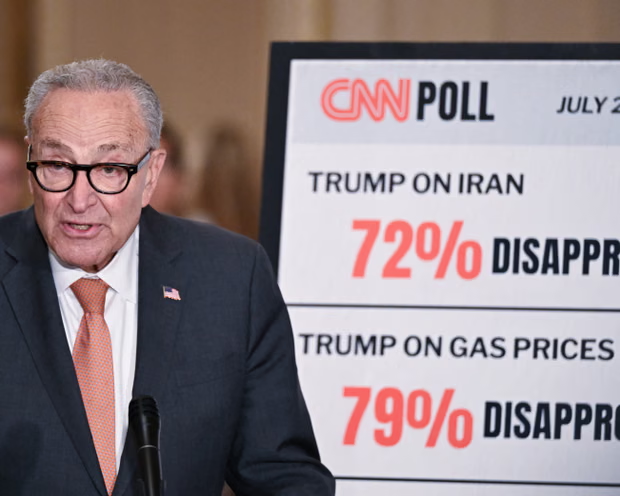
The Senate’s decision comes amid signs of waning public support for the war. Recent polling indicates that a majority of Americans question the necessity of the conflict, placing additional political pressure on the White House as military operations continue.
Meanwhile, domestic political tensions have intensified over President Trump’s nomination of Acting Attorney General Todd Blanche for the nation’s top law enforcement post.
Trump suggested he may temporarily withdraw Blanche’s nomination after two Republican senators—John Cornyn of Texas and Thom Tillis of North Carolina—continued to block his confirmation. The senators are seeking stronger assurances regarding a controversial Justice Department settlement that included a proposed $1.8 billion “Anti-Weaponization Fund,” which critics argue could be misused.
Blanche, who currently serves as acting attorney general, has maintained that the fund will not move forward. However, the dispute has exposed growing fractures within the Republican Party, an unusual development for an administration that has generally enjoyed strong backing from GOP lawmakers.
Immigration policy also remained at the center of legal challenges on Thursday. Two federal appeals courts blocked elements of the administration’s immigration enforcement strategy, including efforts to expand mandatory detention for undocumented immigrants without criminal records. Prosecutors have also criticized the administration’s accelerated deportation procedures involving immigrant minors.
On the international front, Trump reiterated his claim that a breakthrough peace initiative in Gaza had secured an agreement in principle for Hamas and other Palestinian armed groups to disarm. However, continued Israeli military operations and the absence of formal confirmation from all parties have cast uncertainty over the proposed roadmap.
The day’s developments highlight the multiple challenges confronting the Trump administration, from managing an increasingly contentious conflict with Iran to navigating Republican divisions at home and defending its immigration and justice policies in the courts. With Congress preparing for its summer recess and the 2026 midterm elections approaching, the administration faces mounting scrutiny over both its domestic agenda and foreign policy decisions.