For years, Uganda has been praised as one of the world’s most welcoming nations for refugees. Fleeing wars in South Sudan, the Democratic Republic of Congo, Sudan and other neighboring countries, millions found safety in Uganda’s settlements, where they were offered land, education, healthcare and the opportunity to rebuild their lives.
Today, that humanitarian model is under unprecedented strain.
Deep cuts in international aid have triggered a crisis that is quietly unfolding across Uganda’s refugee settlements, leaving hospitals without medicines, families without enough food and humanitarian agencies struggling to keep essential services alive. The crisis is not being driven by conflict inside Uganda, but by shrinking donor support at a time when displacement across Africa continues to rise.
A Refuge for Millions—Running Out of Resources
Uganda hosts approximately 2 million refugees, making it Africa’s largest refugee-hosting nation. Most have escaped violence in South Sudan and the Democratic Republic of Congo, while others have arrived from Sudan, Eritrea and neighboring states.
For decades, Uganda’s refugee policy has been regarded as one of the world’s most progressive. Refugees are allowed to work, move freely, access public services and cultivate small plots of land—an approach designed to encourage self-reliance rather than prolonged dependence on aid.
But that model depends heavily on international funding.
According to humanitarian agencies, the UN refugee response in Uganda has received only about 12% of the approximately $850 million required for 2026, forcing organizations to drastically reduce operations.
Empty Shelves and Empty Plates
The impact is being felt first in refugee households.
The World Food Programme has been forced to scale back assistance dramatically. While it supported about 1.6 million refugees in 2025, only 663,000 people are currently receiving food assistance because of funding shortages. Hunger and malnutrition are rising, particularly among children and pregnant women.
Healthcare has suffered an equally severe blow.
The International Rescue Committee reportedly slashed its Uganda budget from $18 million to $4 million, closing clinics and reducing its workforce by nearly 80%. Remaining health centers are overwhelmed, with shortages of medicines, long queues and limited emergency services. Midwives and doctors warn that pregnant women and newborn babies are among those facing the greatest risks.
One health worker summed up the reality facing many clinics:
“We have fewer drugs, fewer staff and more patients than ever before.”

A Silent Emergency
Aid agencies warn that the crisis extends beyond food and medicine.
Mental health services have been reduced, disease surveillance teams have been cut dramatically, and nutrition programmes have scaled back operations. Community health workers who once identified outbreaks early have largely disappeared due to funding shortages, increasing the risk that preventable diseases could spread unnoticed.
For refugees already carrying the trauma of war and displacement, the disappearance of these services means survival is becoming increasingly uncertain.
Global Decisions, Local Consequences
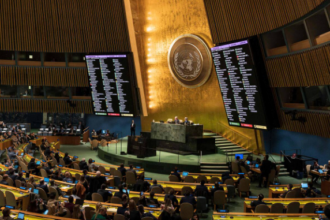
The funding crisis reflects broader reductions in overseas development assistance by several major donor countries, many of which have redirected spending toward domestic priorities or defence.
Humanitarian organizations warn that the consequences stretch far beyond Uganda. Earlier studies have estimated that continued reductions in global aid could contribute to millions of preventable deaths worldwide over the coming years if health and nutrition programmes continue to shrink.
Uganda, despite maintaining one of the world’s most generous refugee policies, cannot sustain its refugee response without international support.
The Human Cost
Behind every funding statistic is a family.
Parents skip meals so children can eat. Expectant mothers walk long distances only to find clinics without medicines. Children who escaped conflict now face hunger instead of opportunity.
Aid workers say the crisis threatens to reverse years of humanitarian progress and could destabilize both refugee settlements and the Ugandan communities that host them.
A recent emergency package from UNICEF and UNHCR has offered some temporary relief, but humanitarian agencies stress that it is far from sufficient to bridge the enormous funding gap.

More Than a Ugandan Crisis
Uganda’s refugee emergency is a reminder that humanitarian crises rarely end when people cross a border.
Providing safety is only the first step. Sustaining life, dignity and hope requires consistent international commitment. As donor funding declines, the burden increasingly falls on countries like Uganda, which continue to keep their borders open despite limited resources.
Without renewed financial support, aid organizations warn that millions of refugees may soon face impossible choices, not because they fled war, but because the assistance that once kept them alive is disappearing.
The world’s response to displacement is often measured by how many people it rescues. Uganda’s current crisis suggests it should also be measured by whether those people can continue to live with dignity after they are saved.