






NAIROBI — The world is on course to cross the critical 1.5°C global warming threshold within the next few years, according to a new United Nations Environment Programme (UNEP) report that warns climate risks will intensify with every additional fraction of a degree.
The assessment, released Wednesday, represents a major shift in the global climate conversation. UNEP says the world must now prepare for an “overshoot” of the 1.5°C target while working to make that period as small and short as possible.
The 1.5°C limit has been at the heart of the 2015 Paris Agreement, under which countries committed to keeping global warming well below 2°C while pursuing efforts to limit it to 1.5°C above pre-industrial levels.
But UNEP’s new report, “Limiting Overshoot,” says crossing the threshold is now likely within years. Even the most ambitious scenarios examined in the report put the eventual peak at about 1.8°C, while less ambitious pathways could result in warming above 2°C.
A dangerous new phase
Scientists emphasize that 1.5°C is not a single point at which the planet suddenly becomes uninhabitable. Instead, climate risks increase progressively as temperatures rise.
Beyond the threshold, the world is expected to face more intense heatwaves, droughts, floods and storms, alongside accelerating glacier loss, rising seas and growing pressure on ecosystems and food systems.
UNEP also warns that higher temperatures increase the possibility of reaching climate tipping points, potentially triggering changes that could be extremely difficult or impossible to reverse on human timescales.
The fight is not over
Despite its stark warning, UNEP says crossing 1.5°C does not mean climate action has failed.
The report proposes an “overshoot, peak and decline” pathway. Under this approach, countries would rapidly cut greenhouse-gas emissions, limit the eventual temperature peak and then gradually bring global temperatures back below 1.5°C.
That would require rapid reductions in fossil-fuel emissions, expansion of low-carbon energy, protection and restoration of forests and other carbon sinks, and eventually large-scale removal of carbon dioxide from the atmosphere.
But carbon removal comes with significant technological, financial and environmental uncertainties, meaning it cannot substitute for immediate emissions reductions.
Every fraction of a degree matters
UN officials and climate scientists are urging governments not to interpret the approaching breach as a reason to give up.
Instead, they say the magnitude and duration of the overshoot will determine how much additional damage the planet experiences.
For vulnerable communities, particularly those in small island states, coastal areas and poorer countries, even relatively small increases in global temperatures can translate into greater risks from extreme weather, sea-level rise, food insecurity and displacement.
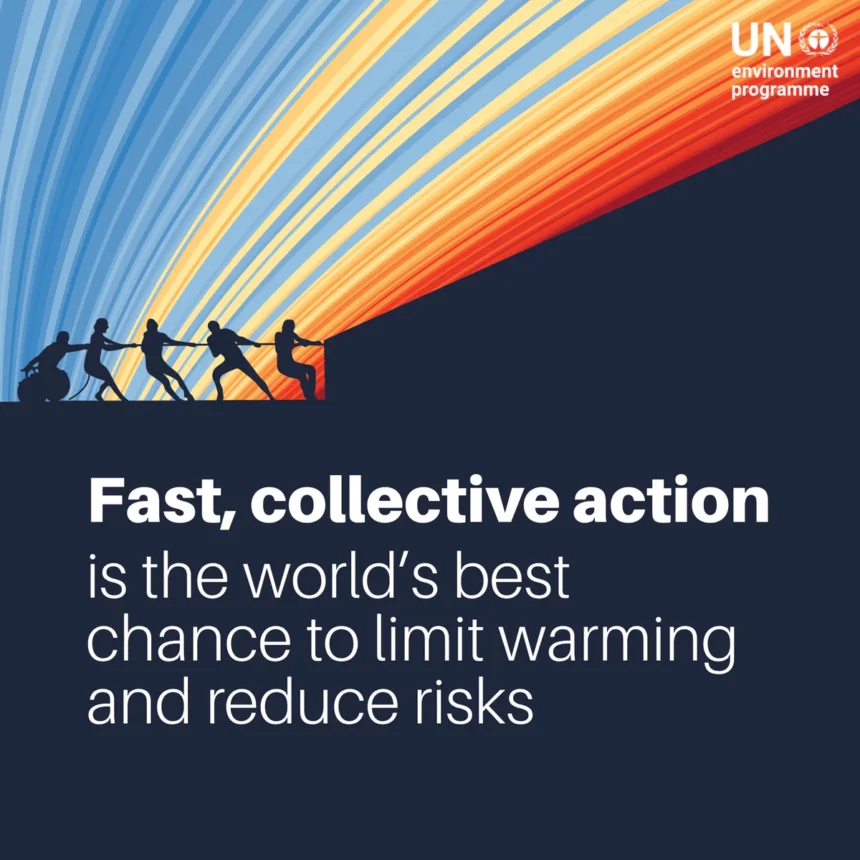
The UN’s message is therefore both a warning and a call to action: the world may be about to cross the 1.5°C line, but the level of warming beyond it is still being shaped by decisions governments make today.
The longer emissions remain high, the higher the eventual temperature peak is likely to be — and the harder it will become to bring temperatures back down.