





The Middle East has entered another period of uncertainty following a fresh exchange of missiles between the United States and Iran, even as diplomatic efforts continue behind the scenes. On the same day, a senior U.S. envoy met with Lebanon’s President, highlighting Washington’s determination to prevent the conflict from spreading further across the region.
The developments underscore the delicate balance between military confrontation and diplomatic engagement, with Lebanon increasingly viewed as a critical player in maintaining regional stability.
Washington Strengthens Diplomatic Engagement with Lebanon
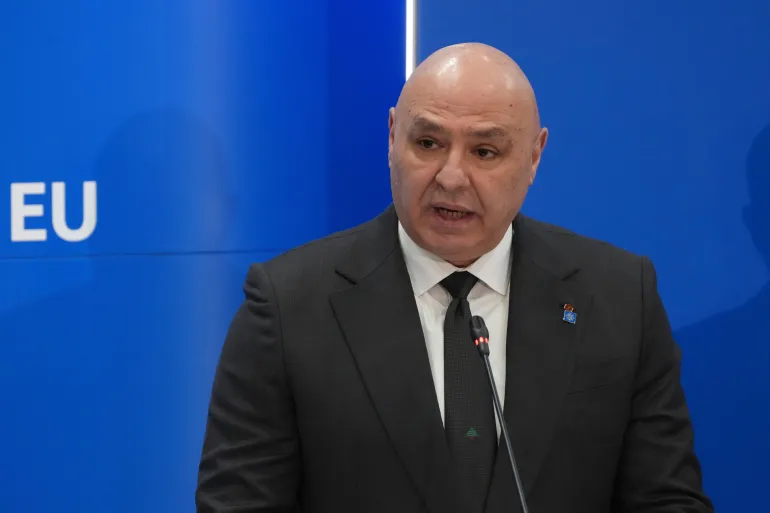
The U.S. envoy’s meeting with Lebanese President Joseph Aoun focused on strengthening bilateral relations and discussing preparations for a future visit to Washington. More importantly, the talks centered on security cooperation and efforts to maintain stability along Lebanon’s southern border.
The United States continues to support the Lebanese Armed Forces as the country’s primary security institution while encouraging reforms that would strengthen state authority. Washington has also reiterated its commitment to preventing further escalation involving Hezbollah, whose close ties with Iran continue to shape the regional security landscape.
Officials emphasized the importance of implementing existing security agreements and ensuring that Lebanon does not become another front in the growing confrontation between the United States and Iran.
New Missile Exchange Intensifies the Crisis
Diplomatic discussions unfolded against the backdrop of renewed military action.
The United States launched another series of strikes targeting Iranian military infrastructure after accusing Tehran of supporting attacks on international shipping routes in the Gulf region. Iran responded with missiles and drones aimed at U.S. military facilities stationed across the Gulf.
While neither side has announced plans for a full-scale war, the latest exchange demonstrates how rapidly tensions can escalate despite ongoing diplomatic efforts.
The renewed hostilities have also raised concerns among global markets. Energy traders are closely monitoring developments around the Strait of Hormuz, one of the world’s most important oil shipping routes. Any disruption to maritime traffic could have significant consequences for global energy prices and international trade.
Lebanon’s Strategic Importance
Lebanon occupies a unique position in the current crisis.
Bordering Israel and home to Hezbollah, the country remains one of the most strategically sensitive locations in the Middle East. Any expansion of hostilities could quickly draw Lebanon into a broader regional conflict.
For Washington, strengthening Lebanese state institutions is viewed as an essential step toward reducing instability. Increased support for the Lebanese Armed Forces is intended to enhance national security while limiting the influence of non-state armed groups.
At the same time, Iran continues to regard Hezbollah as one of its most important regional allies, making Lebanon a focal point in the broader geopolitical competition between Tehran and Washington.
Diplomacy Continues Despite Military Pressure
Although military operations have resumed, diplomatic channels remain active.
Regional mediators, including Oman, Qatar, and Pakistan, continue facilitating indirect communication between U.S. and Iranian officials. These efforts aim to reduce the risk of miscalculation while exploring opportunities for renewed negotiations.
Analysts note that both governments appear to be pursuing a dual-track strategy—maintaining military pressure while leaving the door open for diplomacy.
This approach reflects the reality that neither side appears eager to enter a prolonged regional war, despite increasingly aggressive military exchanges.
What Happens Next?
Several factors will determine whether the situation stabilizes or deteriorates further:
- Whether additional missile or drone attacks occur in the coming days.
- The effectiveness of diplomatic mediation by regional partners.
- Hezbollah’s response to the evolving crisis.
- Security conditions around the Strait of Hormuz and other critical shipping lanes.
- The willingness of both Washington and Tehran to return to meaningful negotiations.
Each of these developments will shape not only regional security but also global economic stability.
The meeting between the U.S. envoy and Lebanon’s president highlights that diplomacy remains an important component of Washington’s Middle East strategy. However, the renewed missile exchange between the United States and Iran illustrates just how fragile the current situation has become.
As military tensions rise and diplomatic efforts continue in parallel, the coming days will be critical in determining whether the region moves toward de-escalation or faces an even broader conflict. Governments, businesses, and international observers will be watching closely as events unfold across one of the world’s most strategically important regions.