




Iran is warning that it will not surrender to Washington’s escalating economic pressure, declaring that it is “fully prepared” to confront a sweeping new round of U.S. sanctions aimed at cutting Tehran off from the global financial system.
The confrontation comes as the United States intensifies its economic campaign against Iran, threatening countries, banks and companies that continue doing business with Tehran with potential exclusion from the U.S. dollar-based financial system.
Iranian Economy Minister Ali Madanizadeh said Tehran had prepared measures to withstand the pressure and suggested that Washington could ultimately suffer another defeat.
The United States has described the latest campaign as an “economic D-Day,” seeking to further restrict Iran’s oil revenues and financial connections around the world. Washington has already sanctioned nearly 60 individuals, companies and vessels linked to Iranian military procurement, cyber activity and oil trading.
Washington takes aim at Iran’s global economic lifelines
The new strategy goes beyond targeting Iranian institutions inside the country.
The Trump administration is warning foreign governments and businesses that maintaining financial relationships with Iran could expose them to U.S. sanctions. Treasury Secretary Scott Bessent has said countries that continue supporting Iran financially risk being pushed out of the dollar-based financial system.
That creates a difficult choice for countries that maintain commercial relationships with Tehran.
China remains particularly important because it is a major buyer of Iranian oil. Washington has so far avoided imposing its most severe measures on major Chinese financial institutions, signaling the potentially enormous economic and geopolitical consequences of such a move.
Iran says it has its own weapons in the economic war
Tehran insists that decades of sanctions have taught it how to operate under financial isolation.
Iranian officials say they have developed alternative trading arrangements, financial channels and other mechanisms designed to reduce their dependence on Western markets.
But the pressure is already being felt.
Iran’s economy has been battered by years of sanctions, currency instability and declining access to international markets. The latest U.S. measures could make it harder for Iranian companies to obtain foreign currency, conduct international transactions and maintain access to global supply chains.
At the same time, Iranian officials have warned that economic pressure could provoke a response beyond the financial arena.
Reuters reported that Iranian officials have threatened retaliation and warned that attacks on Iranian infrastructure could result in Iranian action against U.S. interests and strategically important energy routes.
Why the crisis matters to the world
The confrontation is not confined to Washington and Tehran.
Iran sits at the center of one of the world’s most strategically important energy regions. The ongoing conflict has already disrupted shipping and reduced oil flows through the Gulf, contributing to uncertainty in global energy markets.
Any further escalation could affect fuel prices, shipping costs, food prices and inflation far beyond the Middle East.
For countries in Africa, including Somalia and Kenya, the consequences could be felt through higher transportation and import costs if energy prices rise sharply.
The Somali diaspora is also watching the crisis closely.
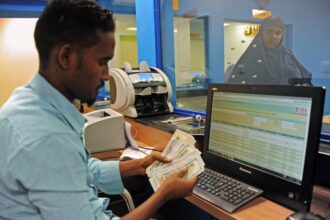
Somalis living across the Gulf states, Europe, North America and East Africa are connected to an increasingly interconnected global economy. Many families depend on international remittances, while businesses depend on affordable transportation, imports and stable financial systems.
A prolonged confrontation between Iran and the United States could therefore create economic consequences far beyond the countries directly involved.
Sanctions versus diplomacy
The biggest question is whether Washington’s economic campaign will force Tehran back to negotiations or deepen the confrontation.
The United States is increasing pressure while diplomatic channels remain uncertain. Iran, meanwhile, says it will resist what it describes as economic warfare.
The latest developments come amid a broader escalation between the two countries. On August 30, U.S. forces struck Iranian rocket launchers on Larak Island near the Strait of Hormuz, while Iran subsequently launched missiles toward a U.S. military base in Jordan, according to reports.
That means the economic confrontation is unfolding alongside a dangerous military standoff.
For the international community, the stakes are enormous.
A prolonged sanctions campaign could further weaken Iran’s economy. But if economic pressure triggers retaliation against energy infrastructure or shipping routes, the consequences could spread rapidly through global markets.
And as Washington prepares to intensify sanctions even further, Tehran is sending its own message:
Iran may be under pressure, but it says it is not prepared to surrender.