






MINNESOTA, United States — Somali American leaders have criticized a Minnesota sheriff’s public warnings about Somali gang violence, arguing that while youth crime is a real concern, broad public statements risk unfairly stigmatizing one of the largest Somali diaspora communities in the world.
The criticism follows remarks by Ramsey County Sheriff Bob Fletcher, who recently highlighted what he described as a growing problem involving Somali youth gangs during broadcasts on his “Live on Patrol” platform. Fletcher said a relatively small group of young people was responsible for a disproportionate amount of violent crime in parts of the Minneapolis–St. Paul metropolitan area and called for greater public awareness of the issue.
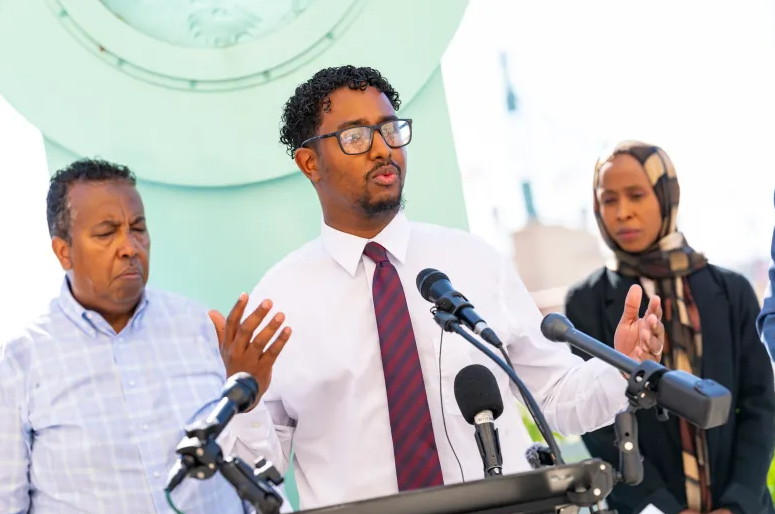
In response, Somali religious leaders, community advocates and civil rights organizations held a news conference, stressing that they do not deny the existence of gang violence but object to framing the issue in a way that implicates the wider Somali community.
“Leadership is not speaking about people. Leadership is speaking with people,” Imam Yusuf Abdulle said, urging law enforcement to engage directly with Somali leaders before making public statements that could reinforce harmful stereotypes.
Community representatives said Somali families, mosques and nonprofit organizations have spent years working to prevent youth violence through mentoring, education and outreach programs. They argued that lasting solutions require stronger partnerships between authorities and local communities rather than public messaging that risks alienating law-abiding residents.
“Our parents have been having those conversations around the dinner table for years, and our nonprofit organizations have been mentoring young people long before anyone decided to livestream the issue,” said Suleiman Adan of the Minnesota chapter of the Council on American-Islamic Relations (CAIR).
Advocate Ali Gaashaan noted that gang-related crime is not unique to any one ethnic group, warning that repeatedly emphasizing ethnicity can create lasting prejudice against entire communities.
“There are gangs in Minnesota; they belong to every other community,” he said, calling for discussions that focus on criminal behavior instead of ethnic identity.
Sheriff Fletcher has defended his comments, saying they were directed at a small number of individuals involved in violent crime rather than the Somali community as a whole. He said he has worked alongside Somali organizations for more than two decades and remains committed to collaborating with community leaders to address youth violence.
“I have worked with the Somali community for 20 years. I welcome the opportunity to collaborate with all organizations wanting to address youth gang violence,” Fletcher said in a statement.
The sheriff has argued that tackling gang violence requires a combination of prevention, intervention and law enforcement, describing the effort as one aimed at saving young lives rather than targeting any ethnic group.
The debate highlights a broader challenge faced by many multicultural societies: balancing transparent discussions about crime with the need to avoid reinforcing ethnic stereotypes. Minnesota is home to the largest Somali population in the United States, and Somali Americans have become an integral part of the state’s economic, political and cultural life.
For community leaders, the central message is that effective crime prevention depends on trust, dialogue and collaboration. While both law enforcement and Somali organizations acknowledge the need to address youth violence, they differ over how the issue should be communicated to the public without unfairly defining an entire community by the actions of a small minority.