





Washington Signals a Major Shift in Somalia Strategy
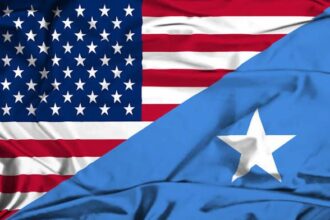
The United States has taken a significant step that could redefine international peacekeeping efforts in the Horn of Africa. Washington has indicated that it will oppose the continued use of United Nations funding to support the African Union Support and Stabilisation Mission in Somalia (AUSSOM), arguing that Somalia must begin taking greater responsibility for its own security after years of international assistance.
The move marks one of the strongest policy shifts toward Somalia in recent years and raises questions about the future of one of Africa’s largest peace support operations.
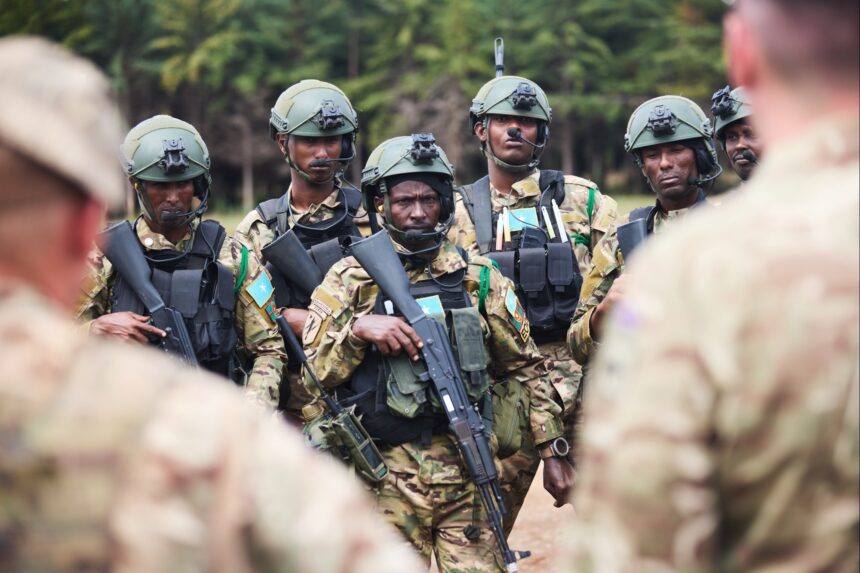
For nearly two decades, the African Union mission first under AMISOM, later ATMIS, and now AUSSOM – has been the backbone of military operations against al-Shabaab. International logistical support funded through the United Nations has enabled thousands of African troops to operate in difficult and dangerous environments where Somali security forces continue to face significant capacity challenges.
Why the US Wants Change
American officials argue that the international community cannot indefinitely finance Somalia’s security sector without measurable political and institutional progress.
According to diplomatic reports, Washington believes years of financial assistance have not translated into sufficient improvements in governance, military readiness, or political cohesion. Continued dependence on external funding, US officials argue, risks creating a cycle where reforms are delayed because international partners continue to absorb the costs.
The position also reflects a broader shift in American foreign policy, where burden-sharing has become an increasingly important principle. Rather than withdrawing support entirely, the US appears to be signaling that future assistance should come with greater accountability and clearer evidence of sustainable progress.
AUSSOM Faces a Difficult Financial Reality
If UN-funded logistical support is withdrawn, the impact could be immediate.
The mission depends heavily on UN assistance for transportation, fuel, medical services, communications, engineering support, equipment maintenance, and food supplies. These are not optional services, they are the foundation that enables peacekeepers to operate across Somalia’s vast and often inaccessible terrain.
Without alternative financing from African Union member states or international donors, operational capacity could decline rapidly.
Military analysts warn that logistics, not combat capability is often the deciding factor in whether peace operations succeed or fail.
Al-Shabaab Could Be the Biggest Beneficiary
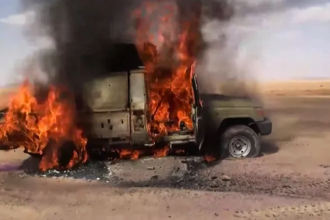
Any weakening of AUSSOM would almost certainly be welcomed by al-Shabaab.
Although the extremist group has suffered significant territorial losses over the past decade, it remains one of Africa’s most resilient insurgencies. It continues to conduct complex attacks, collect taxes in areas under its influence, recruit fighters, and maintain extensive networks across Somalia.
Reduced pressure from African Union forces could provide opportunities for the group to regroup, expand its influence, and launch larger attacks against Somali government positions.
History has repeatedly shown that insurgent groups often exploit security vacuums created by reductions in international military presence.
Kenya Has More at Stake Than Most
For Kenya, developments in Somalia are never distant foreign policy issues.
The two countries share a long and porous border. Instability inside Somalia has previously translated into cross-border terrorism, refugee movements, smuggling networks, and economic disruption.
Kenyan troops have spent years participating in African Union operations inside Somalia, while Kenyan security agencies continue to monitor threats linked to al-Shabaab.
A weaker peace mission could increase security pressure not only along Kenya’s northeastern frontier but also in major urban centers and coastal counties that have previously experienced extremist attacks.
Beyond security, prolonged instability in Somalia affects regional trade corridors, investment confidence, and humanitarian operations throughout East Africa.
The African Union’s Next Test
The funding dispute also places the African Union in a difficult position.
African leaders have long advocated for predictable and sustainable financing for peace operations, arguing that African security challenges require African-led solutions backed by reliable international partnerships.
If major donors begin reducing support without alternative funding mechanisms in place, the AU may face increasing pressure to rethink how future peace operations are financed.
This debate extends beyond Somalia. It could influence future missions elsewhere on the continent, including responses to conflicts in the Sahel and Central Africa.
The Bigger Picture
Washington’s position reflects legitimate concerns about accountability, sustainability, and long-term dependency. International peace operations are expensive, and donor nations increasingly expect measurable returns on their investments.
However, timing matters.
Reducing support before Somali institutions are fully capable of maintaining security independently risks undoing years of hard-fought gains. Counterterrorism campaigns require consistency, and abrupt funding changes can create opportunities for extremist organizations to recover faster than governments can respond.
The challenge for policymakers will be finding a balance between encouraging Somali self-reliance and preventing a security vacuum that could threaten the entire region.
The debate over funding AUSSOM is about more than budgets. It is a test of international commitment to fragile states emerging from decades of conflict.
If managed carefully, the policy could encourage stronger Somali institutions and greater domestic ownership of national security.
If handled poorly, it could become another example of how premature reductions in international support allow extremist groups to regain momentum.
For East Africa, the outcome will not simply determine the future of one peace mission, it could shape regional security for years to come.